Study Reveals Abandonment of Conservation Measures and Threat to Sustainability
Recent global research, with the participation of UC Chile Professor Stefan Gelcich, reveals the crisis of abandonment of conservation measures for protected areas. This phenomenon occurs when conservation initiatives reduce their scope, weaken their level of protection, or even completely reverse it over time, placing at risk key ecosystems, the benefits they provide to society, and environmental protection goals.
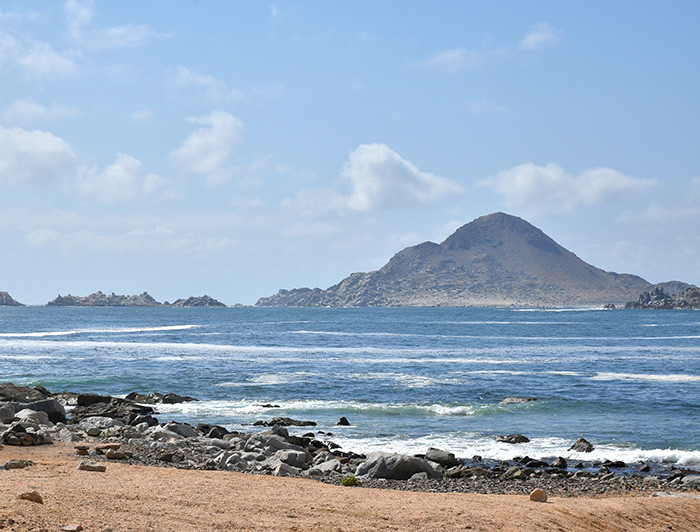
photo_camera This study introduces the concept of “conservation abandonment,” which refers to public, private, or community-led initiatives that fail to meet their conservation objectives. (Photo credit: Fernando Mejías)
A silent but critical phenomenon for achieving the ambitious climate action goals for 2030, which were recently discussed at COP30 in Brazil, was highlighted by a recent study in Nature Ecology and Evolution. The research involved scientists from Imperial College London, the University of Kent, the University of Sydney, and Chilean institutions, including the Coastal Social-Ecological Millenium Institute (SECOS) and UC Chile, among others.
This study introduces the concept of “conservation abandonment,” which refers to public, private, or community-led initiatives that fail to meet their conservation objectives. While some of these initiatives might have reduced their scope or remained inactive or inadequately managed, they continue to be counted as operational and effective, which artificially inflates the global advancements in conservation.
In response to the serious crisis of biodiversity loss, in 2022, 196 countries adopted the Kunming-Montreal Global Biodiversity Framework, committing to protect 30% of the planet from extractive activities such as mining and industrial fishing by 2030. This and other agreements, such as the Paris Agreement, promote conservation initiatives worldwide.

“We are witnessing a major global push to expand conservation action, driven by billions of dollars in public and private investments. But we understand very little of how long these measures last or how to ensure their continuity. This is a significant blind spot in conservation policy, practice, and science. A wake-up call for this issue is urgently needed,” explains Tom Pienkowski, from Kent University’s Durrell Institute of Conservation and Environment, and co-director of the study.
The authors warn that conservation abandonment occurs repeatedly in multiple contexts and countries, but continues to be overlooked, as do its impacts. Currently, there are tools to track this phenomenon only in state-managed protected areas, and their application is not systematic at the global level. Moreover, the study highlights that abandonment also affects initiatives led by local communities, where monitoring is even more complex.
What is happening in Chile?
In Chile, for example, “the allocation of territorial rights to artisanal fishing organizations aims to make them allies in the conservation of coastal ecosystems by promoting sustainable extraction. However, we estimate that 22% of the territorial use agreements granted between 1988 and 2021 were discontinued due to non-compliance with requirements. These abandonment rates reveal gaps in public policy, but also highlight opportunities to strengthen support for these organizations and ensure lasting ecological and social impacts,” states María Ignacia Rivera, co-author of the study and researcher at SECOS.
“By failing to document these patterns,” Rivera adds, “we not only run the risk of overestimating conservation achievements, but also of missing opportunities to learn from them and improve decision-making.”
“To the extent that we document the abandonment of conservation measures and study their causes, we will be able to design strategies that better anticipate this risk and incorporate it into the evaluation of new initiatives,” adds Stefan Gelcich, faculty member of the UC Chile Faculty of Biological Sciences, director of SECOS and co-author of the study.
For Matt Clark, researcher at University of Sydney and co-director of the study, “evidence suggests that at least one third of initiatives are abandoned after only a couple of years of implementation. This blind spot can undermine the progress announced at events like the COP, given that effectively restoring ecosystems can take decades.”
Finally, the authors issue an urgent call for the creation of a global system to monitor conservation abandonment and to study its causes, alongside with more robust and sustainable financing models, and results-oriented policies. This call is even more important in the current political context, in which some countries have withdrawn from international agreements and reduced public funding for conservation, as has been the case for Brazil and the United States in recent years.


